

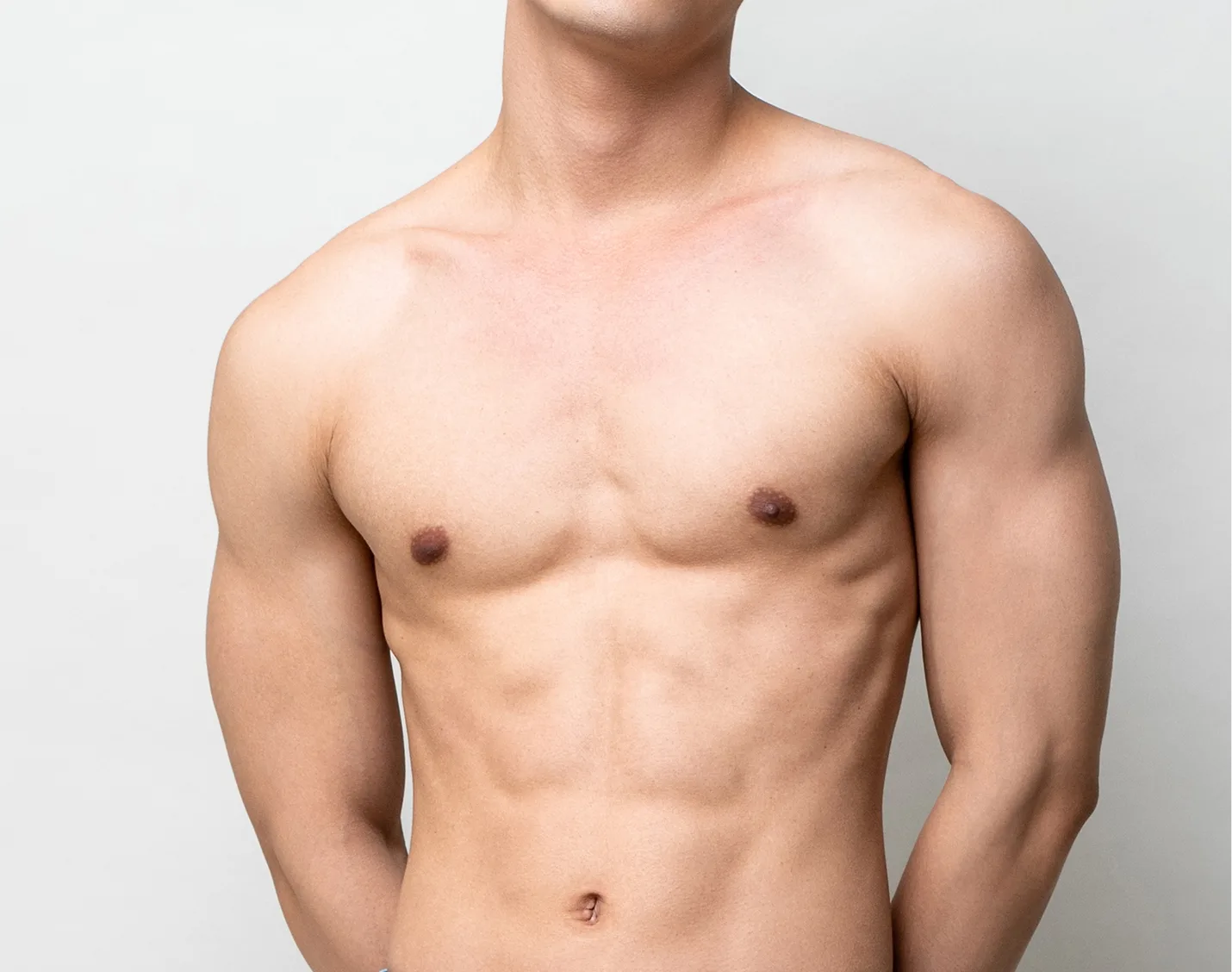
Gynecomastia Self-Care: What Actually Helps and What Doesn't? Banner

Gynecomastia Self-Care: What Actually Helps and What Doesn’t?

There's no shortage of advice online about managing gynecomastia without surgery. Some of it is genuinely useful. A lot of it overpromises. The honest starting point is that self-care won't remove glandular tissue, but it can meaningfully affect how your chest looks, how you feel in your body, and how you carry yourself day to day. At Regeneris, we find that men who have a realistic picture of what self-care can and can't do tend to make better decisions about their situation overall. That's worth something, especially if you're in the middle of figuring out what you want to do longer term.

Exercise: What It Can and Can't Do for Gynecomastia

This is where most men start, and it makes sense. If the chest looks fuller than it should, building the surrounding muscles and reducing overall body fat seems like the logical first move. The reality is more nuanced, and it’s something we address regularly in consultations.
What exercise can do:
  • Reduce the fat component if pseudogynecomastia or mixed tissue is involved
  • Build pectoral muscle mass, which changes the overall proportions of the chest
  • Improve posture, which directly affects how the chest sits and presents
  • Reduce overall body fat, which can make the glandular component less visually prominent
What exercise can’t do:
  • Remove glandular tissue. Gland is structural. It doesn’t respond to caloric deficit or resistance training.
  • Flatten a chest where the issue is a firm subareolar mass rather than fat distribution
  • Fix nipple protrusion caused by actual gynecomastia tissue
The distinction matters because a lot of men spend years training harder expecting results that aren’t coming, not because they’re doing anything wrong, but because the tissue they’re trying to address doesn’t respond to exercise at all.
The gynecomastia self-care exercises worth prioritizing
If there’s a fat component involved, or you want to change the visual proportions of the chest, these are the areas to focus on:
Upper chest development — Incline pressing (barbell or dumbbell) builds the upper pectoral shelf, which draws the eye upward and reduces the appearance of fullness in the lower chest area. This is one of the more effective visual corrections available through training. 
Overall fat loss — Compound movements like squats, deadlifts, and rows burn more total calories than isolation work and build the kind of total body musculature that changes how the chest reads proportionally. Spot reduction isn’t possible, but overall leanness helps.
Posture work — Rows, face pulls, and rear delt work counteract the forward shoulder rounding that many men with gynecomastia develop from years of crossing their arms or hunching to hide their chest. Better posture changes how the chest presents significantly. 
What to avoid: Excessive flat bench pressing that develops the lower chest without balancing the upper portion tends to exaggerate the appearance of gynecomastia rather than reduce it.

Compression Shirts

Compression garments are the most immediately effective self-care tool most men with gynecomastia aren’t using consistently.
A well-fitted compression shirt flattens the chest visibly, works under most clothing, and requires no adjustment to your routine. The difference in appearance and confidence for a lot of men is significant enough that it changes how they carry themselves daily.
A few things worth knowing:
  • Fit matters more than brand. Too loose and it doesn’t compress. Too tight and it’s uncomfortable enough that you won’t wear it consistently. Look for something firm but breathable.
  • They work better under some fabrics than others. Fitted cotton and knit fabrics show the least. Thin, clingy materials can still show the outline of the garment itself.
  • They’re not a solution, they’re a tool. Some men use them constantly, some only in specific situations. Neither approach is wrong.

Clothing Choices

How you dress has a real impact on how gynecomastia presents. These aren’t tricks to hide anything, just practical choices that give you more control over how you look day to day.
Fabrics and fits that work well:
  • Structured fabrics with some weight to them (Oxford cloth, thicker jersey, flannel)
  • Slightly loose through the chest, not oversized
  • Layering with an open button-down or jacket over a t-shirt
  • Darker colors in the chest area
  • Patterns and texture, which break up the chest silhouette
Things that tend to make it more visible:
  • Thin, clingy fabrics like lightweight cotton or modal
  • Very fitted crewneck t-shirts with no layer over them
  • Light solid colors across the chest
  • Athletic wear without a layer over it in casual settings

Diet and Body Composition

Diet affects gynecomastia indirectly. Reducing overall body fat helps when there’s a fat component, and certain dietary habits affect hormonal balance in ways worth being aware of.
A few things that have some evidence behind them:
  • Alcohol — particularly beer — contains phytoestrogens, and chronic heavy drinking is associated with elevated estrogen levels in men. It’s not a direct cause for most cases, but it’s worth factoring in if hormonal balance is already a concern.
  • Soy consumption at high levels has been debated in the literature. The evidence that moderate soy intake causes gynecomastia in healthy men is weak, but a handful of case reports involving very high consumption are documented. 
  •  Aggressive caloric restriction can temporarily suppress testosterone levels and make things worse hormonally in the short term. Steady, moderate deficit is more effective than crash dieting.
None of this is a cure. It’s background optimization.

Mental Health and the Psychological Side

This part gets skipped in most self-care articles about gynecomastia, which is strange because it’s often the most significant part of living with the condition.

The psychological impact is well documented in research. A study on adolescent gynecomastia found that affected patients scored significantly lower on social functioning, mental health, and self-esteem compared to unaffected peers, and importantly, those scores were not tied to severity — even mild cases produced the same psychological impact as more pronounced ones. A separate review found that gynecomastia is associated with depression, anxiety, body dissatisfaction, and reduced self-esteem, consequences that rarely get acknowledged in clinical settings.

We see this regularly. Men come in having minimized their own experience for years because gynecomastia isn’t considered serious by people who don’t have it. The psychological burden is real and doesn’t require external validation.
A few things that are worth considering on the mental health side
Separate what you can change from what you can’t. Clothing, posture, exercise, compression — those are within your control right now. Glandular tissue isn’t, without intervention. Working on what’s manageable while making a clear-eyed decision about the rest tends to produce better outcomes than waiting indefinitely.

Acknowledge the avoidance patterns. Research on adolescent gynecomastia found that the condition functions as an anatomic stressor that disrupts normal self-esteem and identity development. For adult men, those patterns — avoiding the gym, avoiding the beach, wearing extra layers in heat — compound over time. Naming them is the first step to managing them.

Consider talking to someone. If gynecomastia is significantly affecting your quality of life, that’s a legitimate reason to speak with a therapist or counselor, independent of any decision about treatment.

When Self-Care Isn't Enough

Self-care is most useful as a bridge, not a destination. For men with mild gynecomastia, good posture, targeted training, compression, and smart clothing choices can get them to a place where the condition is manageable. For men with more significant tissue, those tools help at the margins but don’t change the underlying picture.
The clearest sign that self-care has reached its limit is when it stops feeling like management and starts feeling like constant work to conceal something. When getting dressed involves a checklist. When certain situations get avoided entirely. When you’ve been doing all the right things and the chest still doesn’t look the way you want it to.
At that point, understanding your actual options is more useful than adding another layer to the management routine. If you want to know what gynecomastia surgery in Boston involves and whether it’s appropriate for your situation, a consultation is the most direct way to get a clear answer.

Peak Masculinity
Starts Here

By Dr. Ryan Welter

March 13, 2026

The Best Version
of You Starts Here
Schedule a consultation with Dr. Ryan Welter