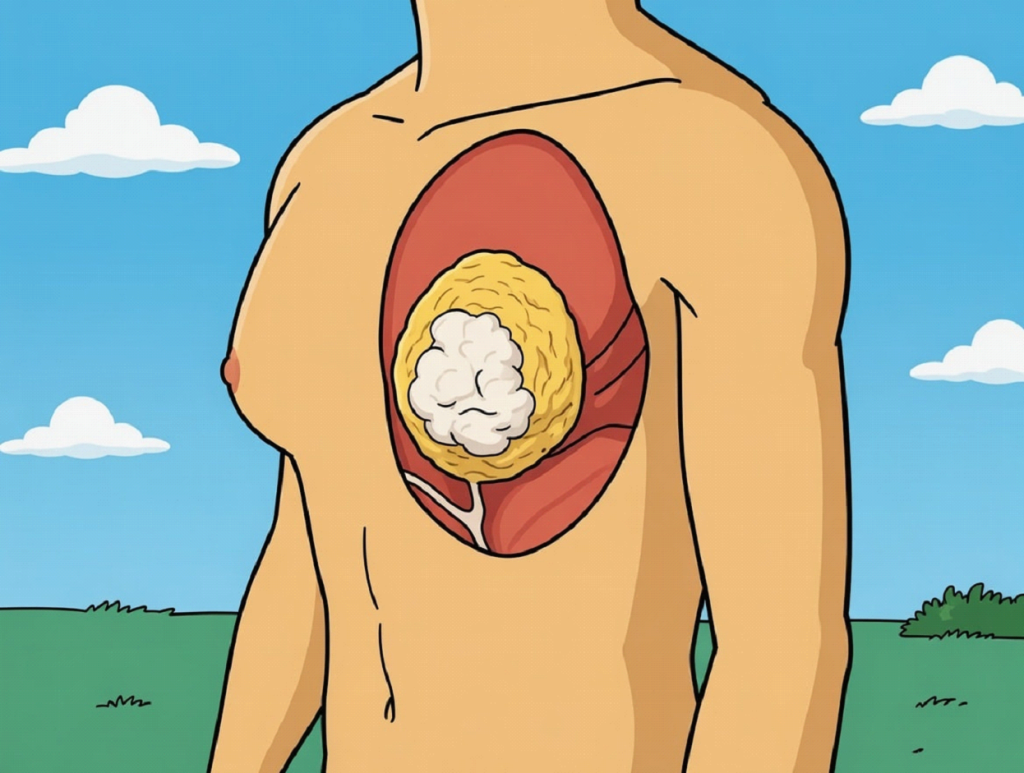


Gynecomastia Treatment Done Right: Why Complete Gland Removal Matters

Gynecomastia surgery is widely discussed, widely advertised, and frequently misunderstood. Many men assume that “male chest reduction” simply means liposuction. Remove some fat, flatten the chest, problem solved. It sounds straightforward. Unfortunately, that is not how true gynecomastia works. And that misunderstanding is responsible for a significant number of revision surgeries. Gynecomastia is an increase in breast gland tissue in boys or men, while pseudogynecomastia is due to excess fat without glandular tissue.
At its core, gynecomastia is not primarily a fat problem. It is a gland problem. That distinction matters. Fat and glandular tissue behave differently. Fat can shrink with weight loss. Fat responds to caloric restriction, exercise, GLP-1 medications, and metabolic change. Glandular tissue does not. Once enlarged, it is firm, fibrous, and resistant to diet and exercise. Excess fat contributes to pseudogynecomastia, while true gynecomastia involves the proliferation of breast gland tissue, which must be surgically removed for effective correction. Gynecomastia can develop due to hormonal imbalances, particularly changes in estrogen and testosterone levels. This is why so many disciplined men become frustrated. They lose twenty, thirty, even fifty pounds. Their waist shrinks. Their face sharpens. Their arms and abdomen respond. But their chest does not change in proportion. The fullness beneath the nipple persists. That persistence is gland. Enlarged male breasts can persist due to underlying glandular tissue, which is common in adult men. Gynecomastia can cause emotional discomfort and self-esteem issues, while pseudogynecomastia may not have the same psychological impact. The best candidates for male breast reduction are healthy adult men with enlarged breasts that have persisted over time and cause embarrassment. Newborns, boys going through puberty, and older men may develop gynecomastia due to natural changes in hormone levels.

Introduction to Gynecomastia

Gynecomastia is a common medical condition that results in the enlargement of male breasts, often due to an imbalance between the hormones estrogen and testosterone. This condition can affect one or both breasts and may present as a small, firm lump beneath the nipple or as a more generalized increase in breast size. For many men, gynecomastia is more than just a physical issue—it can significantly impact self esteem and body image, leading to discomfort in social situations and reluctance to participate in activities like swimming or going to the gym. Male breast reduction, also known as gynecomastia surgery, is a specialized cosmetic surgery designed to remove excess breast tissue, including both glandular breast tissue and excess skin, to restore a more masculine contour to the chest. Plastic surgeons use advanced techniques to ensure natural-looking results, helping men regain confidence and comfort in their appearance. According to the American Society of Plastic Surgeons, more than half of all men will experience some degree of gynecomastia during their lifetime, making it a widespread concern that deserves thoughtful, individualized care. Whether the enlargement is mild or pronounced, male breast reduction surgery offers an effective solution to correct gynecomastia and help men feel more at ease in their own bodies.

Causes and Risk Factors

Gynecomastia can develop for a variety of reasons, and understanding the underlying cause is essential for effective treatment. One of the most common factors is hormonal imbalance—when estrogen levels rise or testosterone levels fall, breast tissue in males can begin to enlarge. This hormonal shift can occur naturally during puberty, but it may also result from aging, certain medications, or health conditions that affect hormone production. The use of anabolic steroids is another significant risk factor, as these substances can disrupt the body’s natural hormone balance and lead to the development of gynecomastia. Additionally, some prescription medications, such as those used to treat prostate cancer, heart conditions, or mental health disorders, may contribute to breast enlargement as a side effect. Underlying medical conditions, including liver failure, kidney disease, testicular tumors, and disorders of the adrenal glands, can also increase the risk of developing gynecomastia. Because gynecomastia may be a sign of other health conditions, it’s important to consult with a healthcare professional or plastic surgeon to determine the specific cause and create an effective treatment plan. Addressing the root cause—whether it’s hormonal imbalance, medication, or a medical condition—ensures that treatment is both safe and successful.

The Anatomy of Getting It Wrong

When a surgeon performs liposuction alone, he may remove surrounding adipose tissue but leave behind the firm gland directly beneath the nipple. The result can be a chest that looks flatter overall but still has a persistent “puffy nipple.” For many men, however, liposuction of the chest through small incisions is all that is needed to produce good results. In some cases, liposuction alone creates a new imbalance. The fat that once camouflaged the gland is reduced. The gland becomes more conspicuous. The patient feels as though something was done, but not enough. If breast gland tissue needs to be excised, a small, semicircular incision in the areola is used to remove the tissue while minimizing scarring. Conversely, aggressive gland removal without thoughtful contouring can produce the opposite problem: a crater deformity. The nipple appears tethered inward, creating an unnatural hollow. The chest looks surgical instead of masculine. In severe cases of gynecomastia, the weight of excess breast tissue may cause the breasts to sag and stretch the areola, requiring more extensive correction, such as tissue excision and skin removal. True gynecomastia correction requires a comprehensive approach:
  • Complete gland excision • Strategic liposuction • Sculpted contouring of the lateral and inferior chest borders
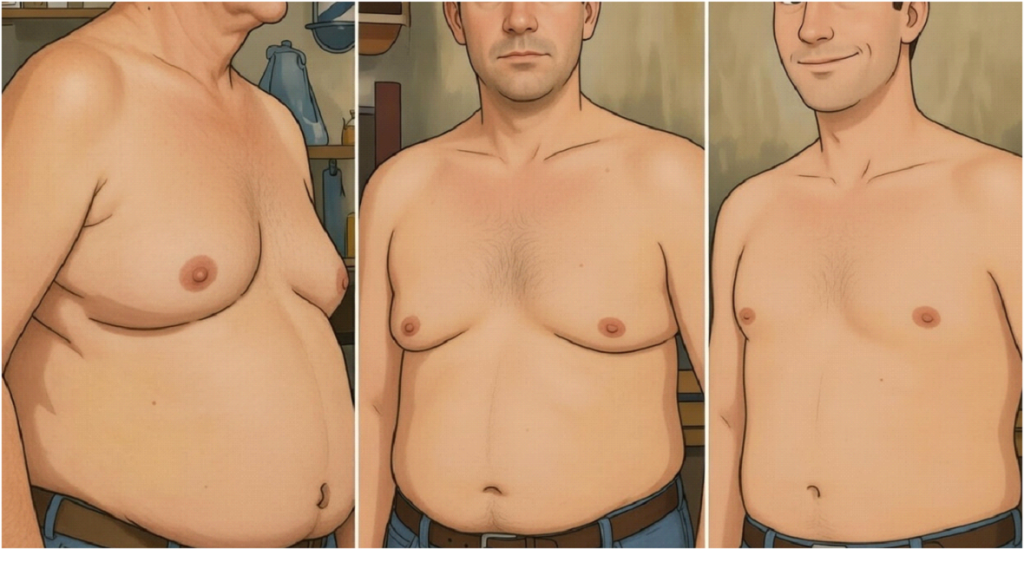
The male chest is not simply flat. It has structure. There is a defined lower border where pectoral muscle meets the upper abdomen. There is a natural transition toward the axilla. There is contour, not emptiness. The goal is not flattening. The goal is definition. Definition is what restores the visual language of a masculine chest. And that visual language matters more than we sometimes admit.

Why Vision Matters in Human Identity

Humans are intensely visual creatures. We evolved with forward-facing eyes, stereoscopic depth perception, and an extraordinary cortical investment in visual processing. We are not primarily scent-driven like canines. We are not primarily pheromone-guided like many insects. We see. Desmond Morris, in The Naked Ape, made the observation that humans devote remarkable biological resources to visual display. Compared to other primates, we carry more visible contour, more permanent body shaping, more persistent secondary sexual characteristics. From an evolutionary standpoint, that is not trivial. Extra adipose contour, muscle bulk, and shape require energy. Energy is costly in the primordial environment. Yet we developed it. Why? Because visual signaling plays a role in mate selection, social hierarchy, and identity. We often discuss female curves in this context, but the male physique has its own signaling function. Broad shoulders, a defined chest, a tapered waist — these communicate vitality and health. Whether we like it or not, physique conveys information. Modern bodybuilding culture is a contemporary extension of something ancient. Men train not only for strength but for shape. They sculpt the chest deliberately. They care about the angle where the pectoral muscle meets the sternum. They notice asymmetry. That attention is not superficial. It is part of how men experience themselves. When glandular enlargement disrupts that contour, it creates friction between effort and outcome. A man may build muscle. He may lower his body fat. Yet if the gland remains prominent, the visual message remains distorted. People with gynecomastia may experience emotional discomfort, impaired self-confidence, and sometimes pain or embarrassment due to the condition. That distortion affects posture. We see it clinically. Rounded shoulders. A subtle forward hunch. Clothing chosen strategically to conceal rather than express. Gynecomastia is not about vanity. It is about alignment between identity and anatomy.

Recurrence: The Long-Term Consequence of Incomplete Gynecomastia Surgery

There is another important consideration: recurrence. In today’s world, testosterone therapy is increasingly common. Some men are legitimately hypogonadal. Others pursue hormone optimization as part of performance or anti-aging efforts. Regardless of motivation, exogenous testosterone can stimulate residual gland tissue. If the gland is only partially removed, it can regrow. This is not theoretical. We see it. Men come to us five or seven years after a prior procedure. They were told their gland was “reduced.” Now the fullness has returned. They feel betrayed by their own biology. Complete excision prevents that. When glandular tissue is fully removed, there is no substrate left to hypertrophy. The procedure becomes definitive rather than temporary. However, significant weight gain or steroid use after surgery could result in a recurrence of gynecomastia, so maintaining a healthy lifestyle is important to preserve results. Revision surgery, by contrast, is more complex than primary surgery. Scar tissue must be navigated carefully. Skin behavior is less predictable. Expectations must be recalibrated. Diagnosis and treatment for gynecomastia should always include a thorough medical evaluation to identify any underlying causes. Getting it right the first time matters.

The Technical Philosophy of Male Breast Reduction at Regeneris

At Regeneris, we approach gynecomastia as a definitive procedure. One surgery. Done thoroughly. No shortcuts. That does not mean maximalism. It means precision. We assess:
  • The ratio of gland to fat • Skin elasticity and turgor • The patient’s age and hormonal status • Lifestyle factors including testosterone therapy • Athletic goals and downtime tolerance
The surgical plan is individualized. Male breast reduction is the most effective known treatment for gynecomastia, and is usually performed as an outpatient procedure, allowing patients to return home the same day. Plastic surgery expertise is essential for optimal chest contour and natural results. Complete gland excision is performed when indicated. Liposuction is used strategically to feather and contour, with a success rate exceeding 90% for gynecomastia cases. The lateral border is shaped deliberately. The inferior chest line is respected. We do not pursue flattening at the expense of structure. We pursue restoration of masculine contour. Equally important, we take postoperative care seriously. Compression, massage, and guided activity progression are not afterthoughts. They are part of the result. Surgery is an event. Healing is a process.

Potential Risks and Complications

Like any surgical procedure, gynecomastia surgery carries certain risks and potential complications. While male breast reduction surgery is generally safe and effective when performed by experienced plastic surgeons, patients should be aware of possible outcomes. Common risks include infection, bleeding, and scarring at the incision sites. Some men may experience changes in nipple sensation, which can be temporary or, in rare cases, permanent. Asymmetry between the two sides of the chest can occur, especially if one breast was more enlarged than the other before surgery. There is also a small risk of contour irregularities or the need for revision surgery if excess tissue is not fully removed or if healing does not proceed as expected. In rare cases, fluid accumulation or delayed wound healing may require additional care. Choosing a board-certified plastic surgeon with expertise in gynecomastia surgery is the best way to minimize these risks and achieve a natural, masculine chest contour. Open communication about your medical history, expectations, and any concerns will help ensure a safe and satisfying outcome.

Recovery and Aftercare

The recovery process after gynecomastia surgery is an important part of achieving the best possible results. Most male breast reduction procedures are performed as outpatient surgeries, allowing patients to return home the same day. In the first few weeks following surgery, it’s common to experience some swelling, bruising, and mild discomfort in the chest area. Wearing a compression garment as recommended by your surgeon helps reduce swelling, supports the new chest contour, and promotes proper healing. Patients are usually advised to avoid strenuous activities and heavy lifting for about two weeks, although light activities can often be resumed sooner. Following your surgeon’s aftercare instructions—including wound care, massage, and gradual return to exercise—will help minimize complications and speed up recovery. Most men notice a significant improvement in chest shape and self confidence as healing progresses, with final results becoming more apparent over several months. By taking recovery and aftercare seriously, you can ensure that your gynecomastia surgery delivers a lasting, masculine contour and renewed self esteem.

The Personal Dimension

It is easy to speak about gynecomastia technically. It is harder to acknowledge the private conversations that accompany it. Men often preface their consult with, “This might sound silly.” It does not. We hear from:
  • The teenage athlete who avoided the pool • The executive who never felt comfortable in fitted clothing • The man who lost fifty pounds and still avoids taking his shirt off • The husband who wants to feel confident in intimacy

These are not trivial concerns. They are lived experiences. Gynecomastia, which causes enlarged breasts in men, can lead to significant emotional discomfort and self-esteem issues. Swimming With My Shirt Off: At 13, I was a guy with breasts, and I needed to get rid of them to survive my upcoming teenage years. I didn’t want to miss the pool time during the trips with my school, so I had to come up with a strategy that would allow me to enjoy the water without being seen. I resolved that the best way to avoid questions was to take off my shirt when everyone was distracted. Modern culture sometimes caricatures male aesthetic interest as insecurity. That misses the point. Caring about one’s physical presentation is not weakness. It is human. Men are visual creatures. Women are visual creatures. We all respond to form and structure. The difference is that men often internalize dissatisfaction quietly. When gynecomastia is corrected properly, the change is subtle but powerful. The shoulders lift. The posture improves. Clothing becomes expressive rather than defensive. Patients with enlarged breasts often report an enhanced sense of self-confidence after male breast reduction surgery. The chest no longer distracts.

A Thoughtful Conclusion

Gynecomastia is common, especially during adolescence due to hormone changes, and in many cases observation may lead to spontaneous resolution. However, the way it is treated should not be casual. Certain drugs can contribute to the development of gynecomastia by affecting hormone levels. Liposuction alone is insufficient when gland is present. Partial excision invites recurrence. Over-aggressive resection invites deformity.

Comprehensive, anatomically informed surgery produces stable results. Medication to balance hormones is most effective during the early, active phase of gynecomastia, but its effectiveness diminishes as the tissue becomes permanently fibrotic. We do not approach gynecomastia as a trend procedure. We approach it as an anatomical correction rooted in physiology and informed by the deeper realities of human identity.

The human body did not evolve casually. It reflects energy investment, structure, and signaling. When that structure is disrupted by glandular enlargement, restoring it thoughtfully is not superficial. It is precise medicine applied to visible anatomy.

Preoperative evaluation for gynecomastia should include screening for breast cancer and male breast cancer to ensure comprehensive care. At Regeneris, we believe in doing it once, doing it thoroughly, and doing it with respect for both the technical and human dimensions of the male chest.

Gynecomastia surgery done right is not about flattening tissue. It is about restoring definition — and with it, confidence that does not require explanation.

Peak Masculinity
Starts Here

By Dr. Ryan Welter

February 19, 2026

The Best Version
of You Starts Here
Schedule a consultation with Dr. Ryan Welter