


Gynecomastia Surgery in Boston: A Complete Guide for Men

Gynecomastia is common, frustrating, and often misunderstood. Many men assume chest fullness is simply fat or poor conditioning. They diet harder, train longer, and still see a rounded or puffy chest that does not respond. At that point, the issue is usually not effort. It is anatomy. For men in Boston, the challenge is rarely access to care. It is choosing wisely in a medical market crowded with academic hospitals, cosmetic practices, and providers with very different levels of experience treating male chest anatomy. This guide is written for men who want a clear explanation of gynecomastia, why it persists, and how to make an informed surgical decision in the Boston area, without hype or sales pressure.

Gynecomastia (Excess Male Breast Tissue) Is Not a Fitness Problem

Gynecomastia is the benign enlargement of male breast tissue. It is not the same thing as chest fat. True gynecomastia involves glandular tissue beneath the nipple-areolar complex, often mixed with some fat.

Medically, it reflects an imbalance between estrogenic and androgenic activity at the tissue level. Estrogen does not need to be high for this to occur. A relative drop in androgen effect is enough.

Cosmetically, gynecomastia alters the male chest contour in ways that are difficult to hide:

  • Rounded or protruding nipples
  • Persistent fullness despite low body fat
  • Asymmetry between sides
  • Self-consciousness in fitted clothing or at the gym

Once established in adult men, glandular tissue rarely regresses on its own.

Common Causes in Adult Men

Gynecomastia in adulthood usually has identifiable contributors. Age-related hormonal shifts Testosterone levels decline gradually with age. Estrogen levels often decline more slowly. The ratio matters more than the absolute numbers. Medications Several commonly prescribed drugs are associated with gynecomastia, including:
  • Spironolactone
  • Finasteride
  • Certain antidepressants and antipsychotics
  • Some cardiac and blood pressure medications
Anabolic steroids and supplements Exogenous androgens suppress natural testosterone production and can lead to estrogen rebound. Some over-the-counter supplements contain undisclosed estrogenic compounds. Body fat and insulin resistance Adipose tissue converts testosterone to estrogen through aromatase activity. Increased fat mass increases this conversion. Alcohol and substance exposure Chronic alcohol intake affects liver hormone metabolism. Cannabis use has also been associated, though causality is debated. Medical conditions Less commonly, gynecomastia can be associated with hypogonadism, thyroid disorders, liver disease, kidney disease, or testicular tumors. A proper evaluation helps rule out uncommon causes, but the presence of a cause does not change the fact that established tissue usually does not resolve without treatment.

Why Diet and Exercise Do Not Fix It

This is where most men get stuck. Fat responds to caloric deficit and training. Glandular breast tissue does not. Men can reach very low body fat levels and still have prominent nipples or chest fullness. In fact, weight loss can make gynecomastia more noticeable by removing surrounding fat. If gynecomastia has been present for more than a year in an adult man, lifestyle measures alone are unlikely to correct it.

Surgical vs Non-Surgical Options

Non-surgical approaches have limited roles. Observation may be reasonable in adolescents or very early cases. Medications can sometimes reduce tenderness in early gynecomastia but rarely reverse established tissue. Fat-reduction devices do not remove glandular tissue. For adult men with persistent gynecomastia, surgery is the definitive treatment.

Types of Gynecomastia Surgery

The surgical plan depends on tissue type, skin quality, and severity.

Glandular excision
Dense glandular tissue beneath the nipple is removed directly, usually through a small incision at the edge of the areola. This allows precise contouring.

Liposuction
Liposuction addresses surrounding fat and smooths transitions across the chest. It is commonly combined with excision.

Skin tightening or excision
In more advanced cases with lax skin, additional skin management may be required. This is less common but sometimes necessary.

The goal is a natural male chest contour, not simply tissue removal. Overcorrection can cause deformities. Undercorrection leads to persistence. Judgment matters. 

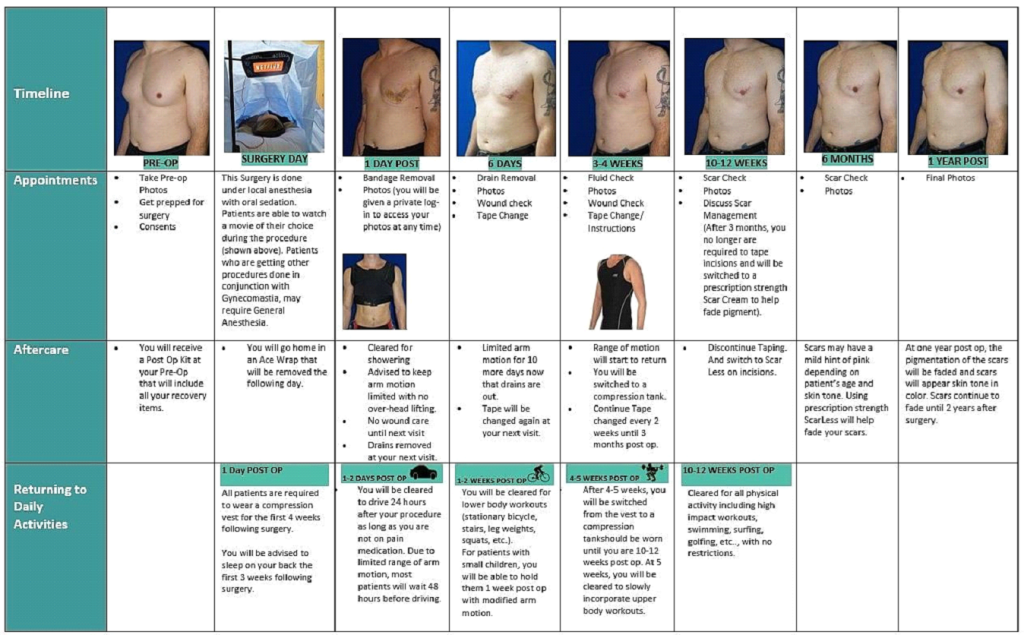
Recovery Timeline

  Week 1 Compression garment worn continuously. Swelling and bruising are expected. Most men describe discomfort as manageable rather than severe.

Weeks 2 to 4
Return to desk work is common. Light activity resumes. The chest begins to look more natural, though firmness can persist.

Weeks 6 to 12
Full exercise is typically allowed. Most swelling has resolved. Early results are visible.

3 to 6 months
Final contour emerges as residual swelling subsides and tissues settle.
Cost of Gynecomastia Surgery in Boston

Boston is a high-cost medical market, shaped by academic hospitals, experienced surgical talent, and higher facility and anesthesia fees than many regions of the country. For gynecomastia surgery, this means pricing reflects not just the procedure, but the depth of training and infrastructure behind it. Most gynecomastia surgeries fall into the low to mid five figures, depending on severity and complexity. Costs typically include the surgeon’s fee, anesthesia, facility costs, and follow-up care. Insurance coverage is uncommon unless strict medical criteria are met. For a detailed breakdown, visit Regeneris.

Choosing a Qualified Gynecomastia Surgeon

In Boston, many highly credentialed surgeons perform gynecomastia occasionally, but far fewer focus on male chest contouring as a distinct anatomical and aesthetic problem. Gynecomastia surgery looks straightforward but is technically nuanced. When evaluating surgeons, focus on:
  • Specific experience with male chest surgery
  • Consistent before-and-after results in men
  • Conservative, anatomically informed technique
  • Willingness to discuss risks and limitations clearly
Board certification is necessary but not sufficient. Volume, judgment, and restraint matter more.

Why Men Choose Regeneris Men

Many men delay treatment because they do not want to be dismissed or upsold. They want straightforward medical advice, discretion, and results that make sense for a male body. At Regeneris Men, care is physician-led and male-focused. Consultations are private and unhurried. Hormonal, metabolic, and aesthetic factors are considered together, not in isolation. Men appreciate an environment that treats gynecomastia as a legitimate quality-of-life issue rather than a cosmetic indulgence.

Frequently Asked Questions

Is gynecomastia surgery permanent? Yes. Removed glandular tissue does not grow back. Weight gain can affect fat, but true recurrence is uncommon. Will there be visible scars? Incisions are usually placed at the areolar edge and tend to fade well over time. How painful is the surgery? Most men report mild to moderate discomfort, well controlled with short-term medication. How soon can I exercise? Light activity begins early. Upper-body training usually resumes around four to six weeks. Is gynecomastia just cosmetic? While insurers label it cosmetic, many men experience real psychological and social distress. Correcting it often leads to significant improvements in confidence and daily comfort.

Final Thoughts

Gynecomastia is common, persistent, and treatable. What holds most men back is not a lack of options, but a lack of clear information. If you have trained hard, lost weight, and still avoid mirrors or fitted shirts, the problem is not discipline. It is anatomy. When properly selected and performed, gynecomastia surgery offers a durable, natural-looking solution. If you are considering treatment in Boston, a focused consultation is the first step toward clarity.

Peak Masculinity
Starts Here

By Dr. Ryan Welter

February 19, 2026

The Best Version
of You Starts Here
Schedule a consultation with Dr. Ryan Welter