

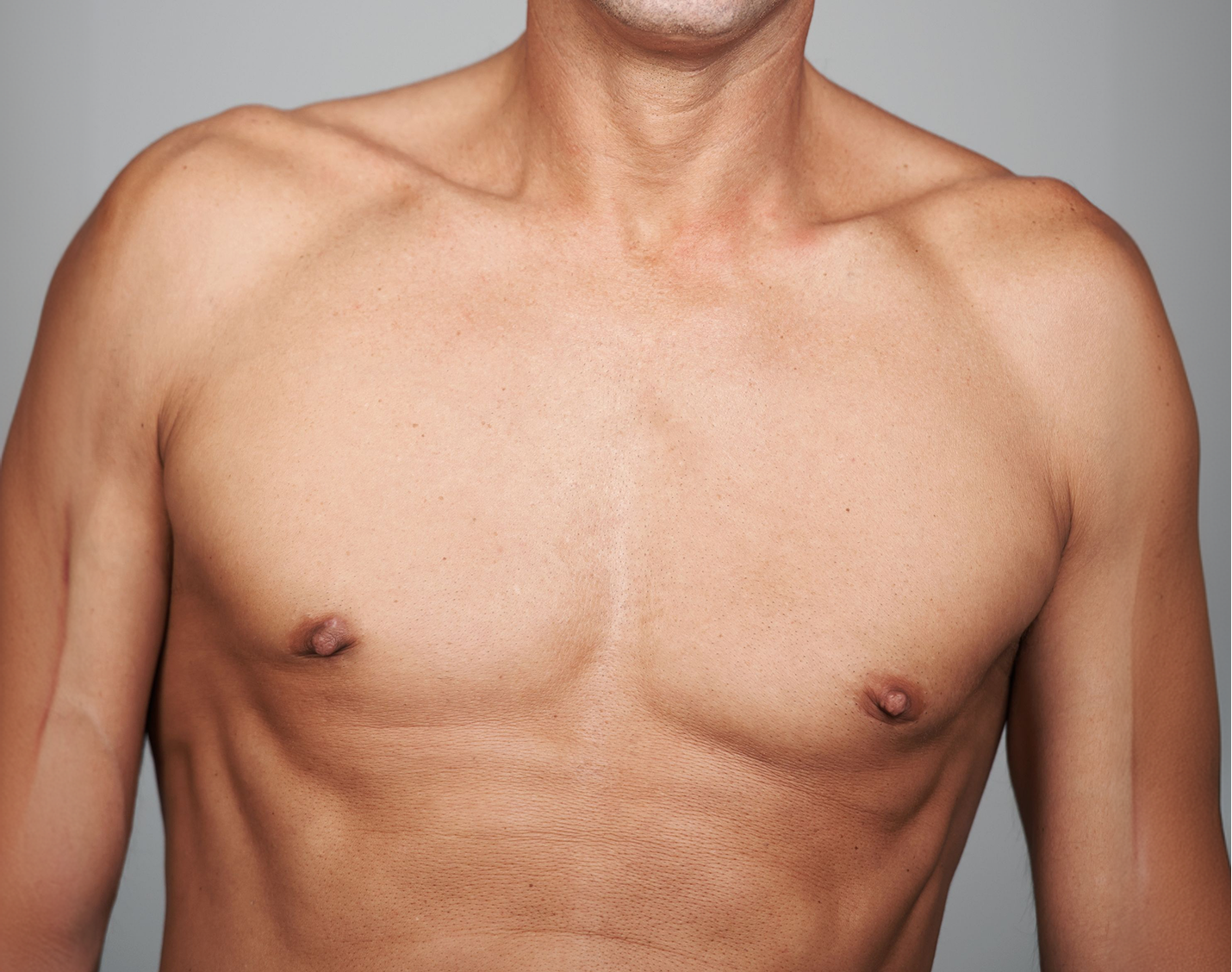
When It Actually Can Resolve
There is a genuine window during which gynecomastia can go away without intervention, and it’s specific to adolescence.
During puberty, the hormonal fluctuations that trigger breast gland development are temporary. As hormone levels stabilize, the tissue that developed during the imbalance can regress on its own. Research supports this — pubertal gynecomastia resolves spontaneously in roughly 75 to 90% of adolescent cases, typically within one to three years of onset. For teenage boys who develop breast tissue between 13 and 17, a period of watchful waiting is often appropriate precisely because spontaneous resolution is genuinely possible.
The window matters, though. Most spontaneous resolution happens within the first 18 months of onset. By age 17, only around 10% of boys who developed gynecomastia during puberty still have it — but that 10% is telling. Those are the cases where the tissue didn’t resolve in the natural window and almost certainly won’t without intervention.
It’s also worth noting that size matters here. Research from surgical literature indicates that glandular tissue larger than 4cm in diameter is unlikely to fully regress even in adolescents, where resolution is otherwise expected. Mild cases have the best chance of natural resolution. More developed tissue is a different situation.
What Happens to the Tissue Over Time
This is the part most men don’t know, and it matters for understanding why waiting has a cost.
Early gynecomastia — tissue that has been present for less than a year — is predominantly soft, actively proliferating glandular tissue. It’s responsive to hormonal changes. If the underlying hormonal imbalance resolves during this phase, the tissue may regress. A medication causing gynecomastia, stopped early enough, can sometimes allow partial resolution. This is the version of the condition where time is genuinely on your side.
After roughly 12 to 18 months, the tissue begins to change in character. The glandular component gives way progressively to fibrous stromal tissue — denser, less vascular, and completely unresponsive to hormonal shifts. Studies confirm that when pubertal gynecomastia persists beyond one year, fibrosis begins to set in, and the likelihood of spontaneous regression drops significantly. A man whose gynecomastia has been present for five years has fibrous tissue, not a soft gland, and no hormonal correction or lifestyle change will reduce it. That tissue is structural at this point.
We mention this not to alarm men but because it shifts the calculus on waiting. There’s a meaningful difference between waiting during the first year of adolescent gynecomastia — which is clinically reasonable — and waiting another five years as an adult, hoping something will change. The second scenario very rarely ends differently.
The Cases Where It Won't Resolve
For adult men whose gynecomastia developed during puberty and was never addressed, natural resolution is not a realistic expectation. Studies put persistent gynecomastia — cases that remain beyond the natural resolution window — at less than 5% of affected boys, but for those men, the tissue has long since fibrosed. The hormonal environment that created it is no longer relevant to its persistence.
The same applies to gynecomastia that developed from external triggers — anabolic steroid use, medications, and significant hormonal shifts from medical conditions. Removing the trigger can stop further development. It does not reverse what’s already there. We’ve seen men who stopped steroid use, cleaned up their diet, and normalized their hormone levels — genuinely doing everything right — and still had the same chest two years later because the tissue present before those changes was already established.
Gynecomastia that develops in older men from age-related testosterone decline follows the same logic. The gradual hormonal shift that created it isn’t something that reverses on its own, and the tissue it produced doesn’t disappear without intervention.
What About Losing Weight
Weight loss can improve the appearance of the chest, but this improvement is largely about reducing the fat component, not the gland. As overall body fat decreases, the chest tends to look flatter and more defined. For men who have pseudogynecomastia — chest enlargement from fat alone with no glandular involvement — weight loss can be genuinely sufficient.
For men with true gynecomastia, weight loss reveals the underlying gland more clearly rather than resolving it. This is one of the more frustrating experiences men describe to us. They worked hard, lost weight, the chest got better for a while, then the improvement stalled at a point that still wasn’t where they wanted to be. The fat went. The gland didn’t.
So How Long Should You Wait
For adolescent boys with recently developed gynecomastia, waiting up to two years is reasonable before considering intervention. The spontaneous resolution rate during this period is meaningful enough to justify observation — provided the tissue isn’t already larger than 4cm, and provided there’s no significant psychological distress in the meantime.
For adult men, the calculation is different. If gynecomastia has been present for more than 12 to 18 months, the tissue has almost certainly begun to fibrose. At that point, waiting longer doesn’t change the outcome — it just extends the time spent managing around it. There is no clinical evidence that gynecomastia, which has persisted into adulthood, resolves spontaneously.
What Resolution Actually Looks Like
For men whose gynecomastia is not going to resolve on its own — which is the reality for the majority of adult men who have had it for more than a year — surgical removal is the only intervention that fully addresses the tissue.
At Regeneris, we perform gynecomastia correction in Boston using the ChestSculpt technique developed by Dr. Ishoo. The procedure is done awake under local anesthesia, removes the glandular tissue through a small lateral puncture, and produces results that are permanent. The tissue that’s removed doesn’t come back.
The decision about timing is a personal one. Some men want to address it as soon as they understand it won’t resolve on its own. Others need more time. What we’d encourage is making that decision with accurate information rather than hope that another year of waiting will produce a different outcome — because for most adult men, it won’t.
Peak Masculinity
Starts Here

By Dr. Ryan Welter
March 12, 2026