

Table of Contents
- A Comprehensive Guide to Making Informed Choices
- The Science Behind LI-ESWT Shockwave Therapy: Mechanisms and Benefits
- Distinguishing Focused and Unfocused Shockwave Technologies
- Evaluating the Evidence: Strengths, Weaknesses, and Contradictions
- The Economic Angle: Device Costs and Franchise Models
- Practical Advice: Choosing the Right Provider and Treatment
- What to Expect from Treatment
- Conclusion
A Comprehensive Guide to Making Informed Choices
Erectile dysfunction (ED) affects an estimated 30 million men in the United States, often due to vascular issues impairing penile blood flow. While oral medications like Viagra or Cialis provide temporary relief, they don’t address underlying causes. This has spurred interest in low-intensity extracorporeal shockwave therapy (LI-ESWT), a non-invasive shockwave treatment aimed at tissue regeneration and improved erectile function. However, the field is muddled by two distinct technologies: focused (linear) versus unfocused (radial) shockwave devices. Clinics often rebrand these as “soundwave treatment” or “GAINSWave” to sound less clinical, masking critical differences in efficacy and quality. These terms frequently refer to radial shockwave therapy or radial wave therapy, both of which are noninvasive treatments marketed for erectile dysfunction.
This article dissects LI-ESWT’s mechanisms, compares focused and unfocused technologies, evaluates key studies—including a flawed one favoring unfocused methods—and offers guidance for men seeking effective ED solutions. Drawing from insights in “Fixing Erectile (Dys-) Function…?” and discussions with field pioneers, we highlight why focused therapy, like that delivered by the Richard Wolf PiezoWave2, may outperform for vasculogenic ED. Our aim is to empower men to choose evidence-based care over marketing-driven franchise models that may prioritize cost over quality.
The Science Behind LI-ESWT Shockwave Therapy: Mechanisms and Benefits
LI-ESWT uses acoustic waves, specifically targeted sound waves, to stimulate penile tissue, triggering healing responses. These sound waves penetrate deep into the tissue, inducing microtraumas that activate the body’s natural healing process. Unlike high-energy shockwaves for kidney stones, low-intensity versions are painless, delivered in brief outpatient sessions. The therapy induces microtraumas, prompting the release of vascular endothelial growth factor (VEGF) and nitric oxide (NO), which drive angiogenesis and enhance blood flow. This improves blood flow and leads to increased blood flow in penile tissue, improving penile hemodynamics, promoting tissue regeneration, and restoring erectile function.
Israeli researchers who pioneered LI-ESWT describe it as creating a “shakeup” in arterial and surrounding tissues, leading to stronger erections While mechanisms are still under study, clinical outcomes are promising. A multicenter trial showed significant improvements in erectile hardness scores with focused LI-ESWT. Psychologically, better erections boost confidence, breaking the anxiety-driven ED cycle. One patient noted, “The confidence boost from knowing I could perform without worry was incredible. It made a huge difference that my wife definitely noticed!”
LI-ESWT’s non-pharmacological approach enables spontaneity, unlike timed medications. A patient compared it to “upgrading my hard drive—everything just worked better.” Dr. William Brandt emphasizes, “Most ED treatments don’t address the cause but provide a temporary fix. LI-ESWT aims to restore past function.” Despite its investigational status per FDA guidelines, its adoption reflects strong demand, with success rates of 70-80% in suitable cases.
Distinguishing Focused and Unfocused Shockwave Technologies
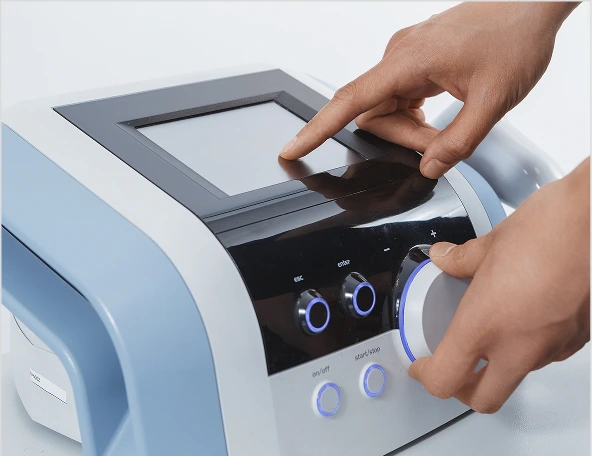
The technical distinction is critical. Focused devices, like the piezoelectric Richard Wolf PiezoWave2, deliver energy in a precise, deep-penetrating beam (up to 10-12 cm), targeting the corpus cavernosum’s vascular structures. High energy shockwave therapy is typically used for conditions like kidney stones, while low-intensity versions are used for ED. Unfocused (radial) devices, such as the SmartWave AWT Unit used by Northeast Men’s Health, use a ballistic mechanism, dispersing energy shallowly (2-3 cm) over a broader area. Radial devices suit musculoskeletal issues but may not reach ED’s deeper vascular targets.
Shockwave therapy work involves delivering acoustic energy through the skin to stimulate healing in soft tissue, tendons, and ligaments. The penis’s anatomy demands precision: key vessels and nerves lie deep, requiring targeted energy for effective neovascularization. Focused waves minimize energy loss, potentially offering superior long-term outcomes. Radial alternatives, while simpler and cheaper, may only stimulate superficially, limiting impact on ED’s core pathology. Radial devices are often used for musculoskeletal disorders due to their ability to treat superficial soft tissue injuries. Clinics often avoid “shockwave” terminology, using “GAINSWave” (a protocol, not a device, often paired with radial machines like those from Storz Medical or Zimmer) or “soundwave” to soften the image, but patients must ask: focused or unfocused?
Evaluating the Evidence: Strengths, Weaknesses, and Contradictions
LI-ESWT research is robust but uneven, with over 40 studies published. A 2019 Turkish study (Eryilmaz et al.) compared focused and unfocused ESWT in 40 men, claiming unfocused was more effective (65% vs. 50% success per Erectile Hardness Scores). Its flaws—no randomization, no control group, small sample, and potential bias—undermine its validity, possibly skewed to favor cheaper unfocused devices.
Stronger evidence supports focused therapy. A 2025 meta-analysis revealed focused shockwaves significantly outperformed radial in International Index of Erectile Function (IIEF) scores, with lasting benefits. Reviews confirm focused waves’ deeper efficacy for vasculogenic ED. For the PiezoWave2, a multicenter trial reported 81% improvement in mild-to-moderate ED after 12 sessions, with effects persisting six months.<sup>18</sup> Randomized trials affirm focused methods’ edge, citing precise energy delivery, with success rates up to 80% and durability of 6-24 months.<sup>19</sup>
A Cleveland Clinic trial in prostate cancer survivors is testing focused versus radial, expecting focused to excel.<sup>20</sup> Side effects are minimal (e.g., mild redness), with protocols involving 6-12 sessions (twice weekly, 0.09-0.25 mJ/mm²). Treatment protocols are designed to maximize safety and effectiveness.<sup>21</sup> Unfocused devices show some musculoskeletal benefits, where shockwave therapy is often considered a conservative treatment before more invasive options. In these cases, shockwave treatment helps heal injuries by stimulating tissue repair, but ED data is weaker, often from less rigorous studies.<sup>22</sup>
The Economic Angle: Device Costs and Franchise Models
Device costs can influence what clinics offer. Focused systems like the PiezoWave2 typically range from ~$38,000, reflecting their advanced design for deeper treatment. Radial devices, such as the SmartWave Standing Trolley AWT or those used in GAINSWave protocols (e.g., Storz MASTERPULS or Zimmer enPuls models), are often more affordable for clinics, with prices generally between $9,000 and $20,000 for trolley-mounted versions suitable for professional use. This lower entry point can make them appealing for “McDonald’s-style” franchises like Gameday Men’s Health and Northeast Men’s Health, which focus on scalability and standardized treatments to keep operations efficient. Shockwave therapy is also popular among professional athletes and is frequently administered by sports medicine specialists and athletic trainers as part of a multidisciplinary team, both in clinical settings and on the field.
Northeast Men’s Health, with sites in New England (e.g., Marlborough, MA), uses the radial SmartWave Standing Trolley AWT Unit for its “soundwave treatment” (IntraPulse program), combining ESWT with other therapies. Gameday employs the GAINSWave protocol, typically with radial devices from manufacturers like Storz or Zimmer, charging $400-$500 per session. These clinics may reference studies like the Turkish one, but overall evidence tends to lean toward focused devices for potentially better penetration in ED cases.
In contrast, clinics like Regeneris Elite Men’s Health Clinic, an outreach of a regenerative medicine-focused practice serving men and women, invest in premium tools like the PiezoWave2. This aligns with a patient-centric ethos, emphasizing comprehensive enhancements in sexual health and overall well-being over volume-driven care.
Practical Advice: Choosing the Right Provider and Treatment
Selecting LI-ESWT requires some homework. It’s a good idea to ask about the device type (focused like PiezoWave2 or radial like SmartWave), the manufacturer, and any studies backing their approach. Working with board-certified urologists or regenerative specialists who follow evidence-based protocols can help. Watch out for franchises that aren’t upfront—Northeast Men’s Health’s initial vague “big” device description (later identified as SmartWave) might be a red flag for some.
LI-ESWT shows promise for vascular-related ED, even for those who don’t respond well to pills, but it’s not a guaranteed fix for everyone. It is less invasive than many other treatments and may reduce the risk of scar tissue formation compared to surgical procedures, making it a good option for those seeking alternatives to more invasive treatments. However, men with certain health conditions, such as heart disease, should consult their doctor before starting shockwave therapy. Combining it with healthy habits like better diet and exercise could boost results. Full treatment courses usually cost $3,000-$6,000, with focused options sometimes on the higher end but potentially offering more value over time.
What to Expect from Treatment
When considering shockwave therapy as a non-invasive treatment option, most patients can anticipate a straightforward and efficient experience designed to promote healing and reduce pain. The procedure is typically performed in a clinical setting by a trained professional, using a handheld shockwave device that delivers high energy acoustic waves directly to the affected area. Each session usually lasts between 5 and 15 minutes, depending on the specific condition being addressed and the size of the treatment area.
During the session, the device emits pressure waves that penetrate the underlying soft tissues, stimulating blood flow and encouraging the formation of new blood vessels. This increased blood circulation is a key factor in the body’s natural healing process, helping to reduce inflammation and accelerate recovery. While some patients may feel mild discomfort or a tingling sensation as the pressure waves are applied, this is generally well-tolerated and subsides quickly after the treatment ends.
Shockwave therapy is commonly used to treat a variety of musculoskeletal conditions, including plantar fasciitis, tennis elbow, and other sports injuries, as well as chronic pain in soft tissues. Most patients undergo a series of treatments—typically three to six sessions spaced one to two weeks apart—to achieve optimal results. Some individuals notice pain relief and improved function after just one session, while others may require several treatments before experiencing significant benefits.
It’s important to understand that shockwave therapy is often used in conjunction with other conservative treatments, such as physical therapy or deep tissue massage, to enhance the overall healing process. It is not intended to replace these therapies but rather to complement them, providing an additional tool for managing pain and promoting recovery.
However, shockwave therapy may not be suitable for everyone. Individuals with certain health conditions, such as kidney stones, prostate cancer, or multiple sclerosis, should consult with their primary care provider or a sports medicine specialist before beginning treatment to ensure it is safe and appropriate for their specific needs.
Insurance coverage for shockwave therapy can vary, and not all insurance plans will cover the cost of these treatments. It’s advisable to check with your provider beforehand. Despite this, many patients find that the potential for reduced pain, improved mobility, and enhanced quality of life makes shockwave therapy a valuable investment in their health.
With its noninvasive approach, minimal side effects, and ability to stimulate blood flow and promote healing in underlying soft tissues, shockwave therapy stands out as an effective option for those seeking relief from persistent pain and a faster return to normal activity.
Conclusion: Empowering Men Toward Better Sexual Health and Increased Blood Flow
Focused shockwave therapy, such as with devices like the PiezoWave2, appears to have some advantages in precision and depth for treating ED, based on available research. Unfocused radial options, like the SmartWave or those in GAINSWave protocols, are popular and more accessible but may not always match up in the same way, despite their appeal. While studies like the Turkish one have limitations, ongoing research is helping clarify what works best for vascular issues. The key is picking clinics that put quality first—men can see real improvements in function, confidence, and daily life by doing so. Talk to a doctor, look at the facts, and focus on treatments that aim to fix the root problem rather than just the symptoms. Getting back to a more confident version of yourself is worth exploring.
Peak Masculinity
Starts Here

By Dr. Ryan Welter
December 23, 2025